
Politics
Manipur Violence Persists in 2026 as Fresh Killings Highlight Deep-Rooted Meitei-Kuki Divide
By MILLENNIUM NEWSROOM Desk · Published: Jun 08, 2026 02:47 AM · Updated: Jul 01, 2026 03:19 AM
5 min read
Fresh Violence Raises New Concerns in Manipur
Manipur continues to grapple with ethnic tensions as fresh violence in Kangpokpi district claimed the lives of three Kuki villagers, including a woman. The latest incident has once again brought national attention to one of India's most complex and prolonged internal conflicts, which has persisted since May 2023.
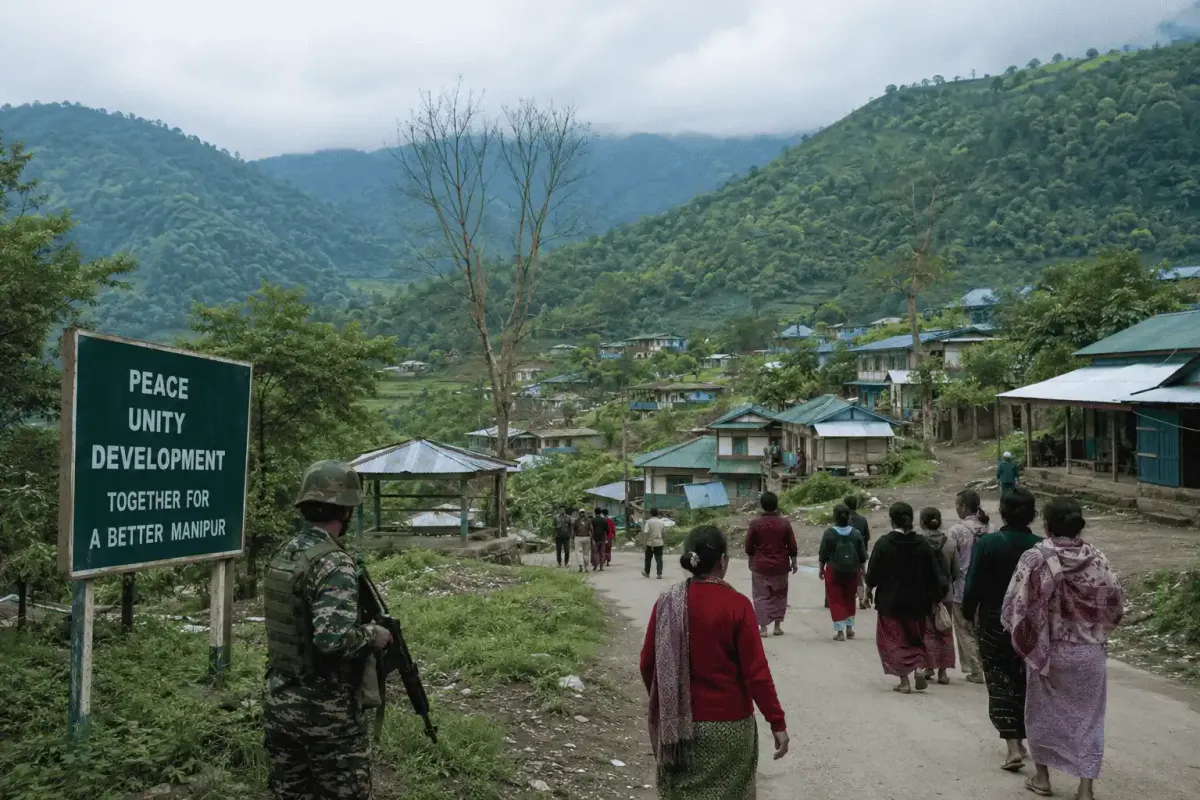
Security forces have intensified deployments in sensitive areas while simultaneously conducting community outreach programs aimed at discouraging youths from participating in violence. Authorities have urged village leaders and residents to promote peace and prevent further escalation.
Understanding the Origins of the Conflict
The conflict primarily involves the Meitei community, which is concentrated in the Imphal Valley, and the Kuki-Zo tribal communities inhabiting the hill districts. Although tensions between the groups have existed for decades, the current phase of violence began in 2023 following controversy surrounding the demand for Scheduled Tribe (ST) status for the Meitei community.
Tribal organizations opposed the proposal, arguing that granting ST status to the state's majority community could affect constitutional protections related to land ownership and political representation in tribal areas. The issue soon escalated into widespread violence, leading to displacement, loss of life, and deep social divisions.
The Meitei Perspective: Identity, Land, and Security Concerns
The Meiteis constitute roughly half of Manipur's population and are primarily concentrated in the fertile Imphal Valley, which accounts for only a small portion of the state's total land area. Many Meitei organizations have long argued that increasing population pressure, limited land availability, and concerns over illegal immigration from neighboring Myanmar have intensified socioeconomic challenges.
Several Meitei groups have demanded Scheduled Tribe status, arguing that it would help preserve their cultural identity, language, and traditional customs while providing constitutional protections available to other indigenous communities. Supporters of the demand contend that the community has experienced significant demographic and economic pressures over the years.
Meitei residents have also suffered during the conflict, with numerous families displaced from mixed-population areas. Community leaders frequently cite attacks on villages, disruptions to livelihoods, and security concerns along buffer zones separating ethnic groups.
The Kuki-Zo Perspective: Protecting Constitutional Safeguards
The Kuki-Zo tribal communities, who predominantly inhabit Manipur's hill districts, strongly oppose the extension of Scheduled Tribe status to the Meitei community. Their primary concern is that such a move could weaken protections currently available to tribal populations regarding land ownership and self-governance.
Kuki organizations argue that opening tribal areas to a larger and more economically influential community could alter demographic balances and affect the rights historically granted to indigenous hill tribes. Many community leaders also maintain that the violence since 2023 has fundamentally changed relations between communities and requires long-term political solutions.
How the Conflict Escalated Since 2023
The current conflict erupted after tribal organizations organized protests against a recommendation linked to the Meitei community's demand for Scheduled Tribe status. What began as demonstrations quickly transformed into one of the most severe episodes of ethnic violence in recent Indian history.
Over the following months, clashes spread across multiple districts. Villages were attacked, homes were burned, and thousands of residents fled to safer areas. Armed groups emerged on both sides, further complicating security operations and peace-building efforts.
The violence created de facto ethnic divisions across several parts of Manipur, with communities relocating to areas where they formed a local majority. These developments significantly altered the social and demographic landscape of the state.
The Humanitarian Crisis Continues
One of the most serious consequences of the conflict has been the humanitarian crisis affecting thousands of families. Large numbers of internally displaced persons continue to live in relief camps across Manipur.
Many families have spent years away from their homes, struggling with uncertainty regarding rehabilitation and resettlement. Children have faced disruptions in education, while access to healthcare, employment opportunities, and essential services has been affected in several regions.
Community leaders and humanitarian organizations have repeatedly emphasized the need for long-term rehabilitation measures alongside security interventions.
Government's Response So Far
The Central Government has undertaken extensive measures to contain the violence and restore stability. Large deployments of the Indian Army, Assam Rifles, Central Reserve Police Force (CRPF), and state police personnel have been maintained across sensitive districts.
Security forces have established buffer zones between rival communities, conducted search operations to recover looted weapons, and increased surveillance in vulnerable areas. Authorities have also launched peace outreach initiatives aimed at reducing tensions and rebuilding trust among local populations.
In February 2025, President's Rule was imposed in Manipur following prolonged political and administrative challenges. The decision transferred governance responsibilities to the Centre through the Governor, with the objective of improving law-and-order management and administrative coordination.
Recent efforts have additionally focused on community engagement. Security officials have urged village elders, civil society organizations, and local leaders to encourage young people to reject violence and support peaceful dialogue.
Why Peace Remains Difficult to Achieve
Despite significant security deployments and administrative interventions, peace remains elusive because the conflict extends beyond immediate law-and-order concerns. The dispute involves historical grievances, ethnic identity, political representation, land rights, migration concerns, and competing visions for the state's future.
Both Meitei and Kuki communities view themselves as victims of violence and displacement, making reconciliation particularly challenging. The continued availability of weapons and the existence of armed groups further complicate efforts to establish lasting peace.
Experts believe that sustainable solutions will require political dialogue, confidence-building measures, justice mechanisms, rehabilitation of displaced populations, and economic reconstruction programs that address the concerns of all communities.
What Lies Ahead for Manipur?
The latest killings in Kangpokpi district demonstrate that the situation remains fragile despite ongoing security measures. While authorities continue to work toward restoring normalcy, the underlying issues that triggered the conflict remain unresolved.
For the people of Manipur, lasting peace will likely depend on a combination of security, political engagement, rehabilitation, and reconciliation. Until meaningful progress is achieved on these fronts, the state may continue to face periodic outbreaks of violence that hinder development and social cohesion.
The coming months will be crucial in determining whether peace initiatives can bridge the divide between communities and create conditions for the safe return of displaced families. For now, Manipur remains a state searching for stability after years of conflict that have reshaped its social and political landscape.